Journal
Arriving in Bangalore: A Considered Guide for International Travellers
Notes for visitors landing in India's quietest major city: Kempegowda International Airport (KIA), the journey in, and the first day.
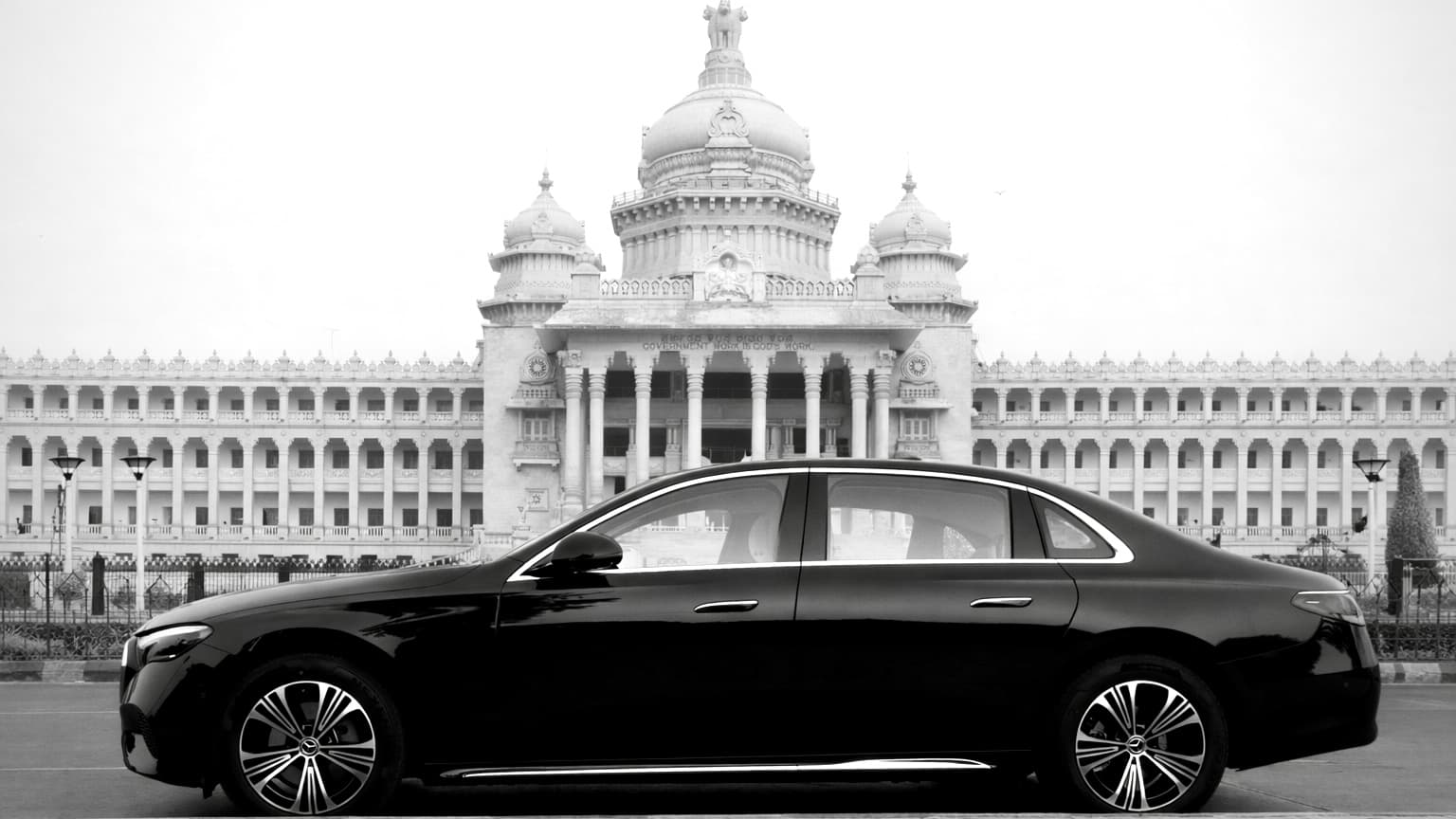
Most cities introduce themselves with noise. Bangalore introduces itself with weather. The first thing a long-haul arrival notices, stepping out of Kempegowda International Airport (KIA) at six in the morning, is not traffic or crowds. It is the temperature. Twenty degrees, sometimes cooler, often with a fine residue of overnight rain still on the road. For the visitor who has just stepped off a flight from London, Frankfurt, Dubai, Singapore, or San Francisco, the surprise is not heat. It is the absence of it.
This is the first of several things Bangalore does differently. The point of this piece is to address the others before you encounter them.
This is a guide for the traveller arriving for business, for a wedding, for a conference, or for a longer visit that begins with a long flight. It is not a guide to the city's restaurants or its weekend escapes; those deserve their own writing. It is a guide to the first twenty-four hours, written from the operating side of those hours: from the chauffeur's view at arrivals, from the hotel lobby at two in the morning, from the rear-view mirror on the long quiet drive from the airport into the city.
The flight in
The vast majority of international arrivals into Bangalore land between midnight and six in the morning. This is a function of how the global airline network routes traffic into India. The Gulf carriers connecting through Doha, Dubai, and Abu Dhabi land around two. The Singapore and Hong Kong routes deposit travellers between half past midnight and four. The European long-hauls from Frankfurt, Paris, Amsterdam, and London touch down in the small hours. The North American connections, almost without exception, arrive overnight.
The practical consequence is that most visitors land in a city that is asleep. Bangalore does not yet have the round-the-clock circulation of Delhi or Mumbai. The airport itself is well lit and orderly at three in the morning, but the city beyond it is not. This is not a problem if it is anticipated. It is a meaningful problem if it is not.
The most overlooked detail follows from this. The hotel check-in question matters more here than in most cities. Many international visitors arrive well before the standard two o'clock check-in time and end up either waiting in lobbies or paying for the previous night to guarantee the room. The reasonable hotels in Bangalore are accommodating about early check-in if asked twenty-four hours in advance; the unreasonable ones are not. Ask in advance, not on arrival.
Kempegowda International Airport
The airport itself is the single best piece of arrival infrastructure in India. Both Terminal 1 and the newer Terminal 2 are well designed, well staffed, and unhurried. Immigration moves at a reasonable pace for international arrivals, though the queues thicken in the four-to-six in the morning window when several long-hauls land together. Allowing forty-five minutes from gate to kerb is realistic; an hour is safer if the flight is full.
Terminal 2, which now handles a growing share of international traffic, is worth a moment of attention. It is built around an interior garden, and the experience is genuinely calm, quieter than most terminals on the same itinerary. If the option exists to fly on a carrier that uses Terminal 2, it is the better arrival.
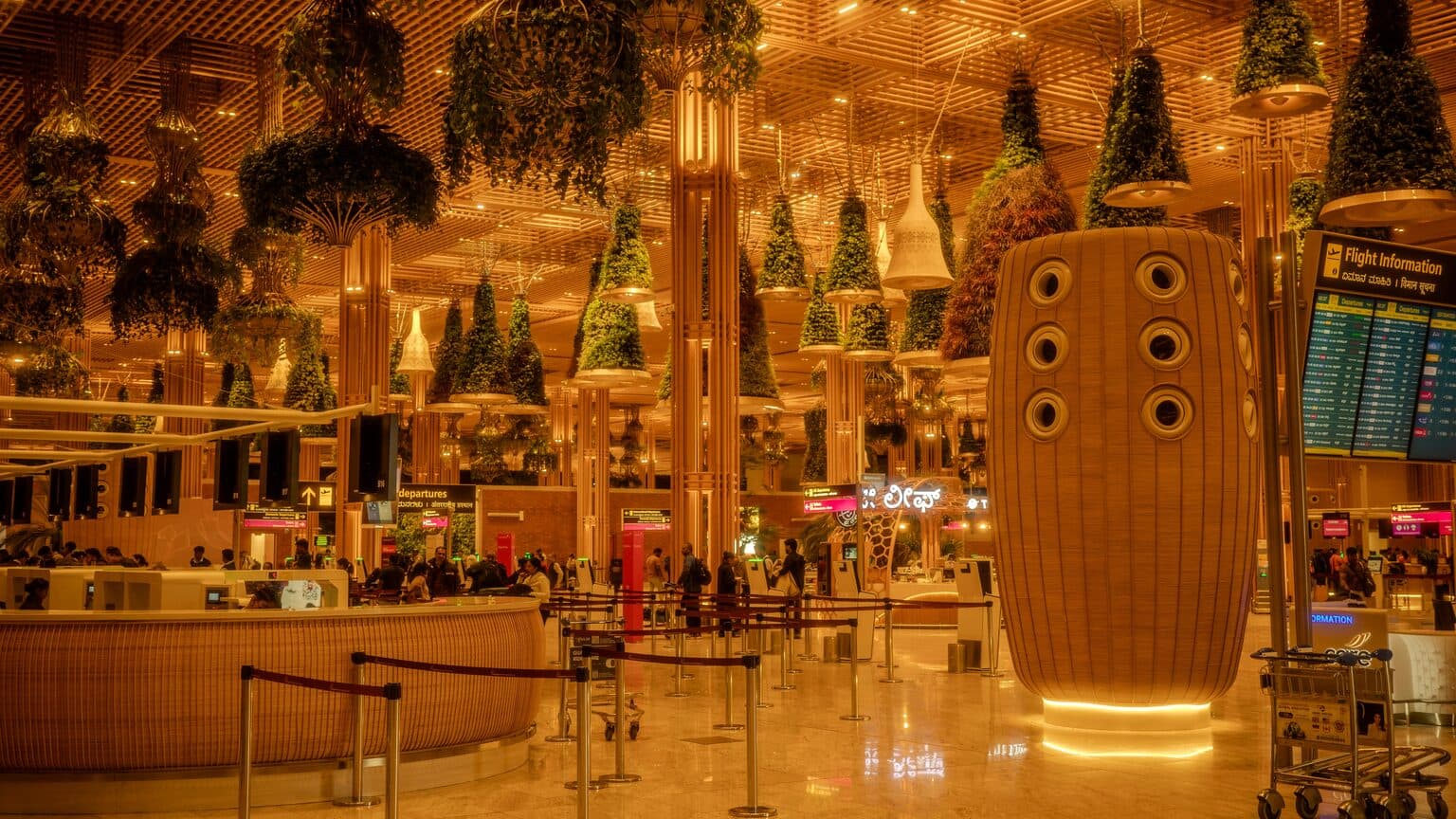
The most useful thing to know about the airport, and the thing first-time visitors most consistently get wrong, is the meet-and-assist point. There is no single concourse where chauffeurs and meet-and-greet staff wait. The pickup areas are organised by terminal and by mode of transport, and the local convention is for the chauffeur or representative to be standing at the exit of the relevant arrivals concourse with a name placard. Pre-booked transport, whether arranged through a hotel concierge, a corporate travel desk, or a private chauffeur service in Bangalore, should always confirm the exact meet point in writing before the flight. The standard practice is that the chauffeur is positioned and visible before the flight lands, with the placard, with the passenger's name, and with the vehicle close enough to the kerb that the transition from terminal to seat is brief.
The alternative (disembarking, clearing immigration, collecting luggage, walking to the public taxi rank, and negotiating a ride at three in the morning after twelve hours in the air) is the part of Bangalore that consistently goes wrong for first-time visitors. It is rarely dangerous. It is almost always disorganised.
Bangalore is not arranged by distance
This is the section most arrival guides skip, and it is the section that decides whether the visitor arrives at the hotel calm or harried.
The mistake most visitors make is assuming Bangalore behaves like London, Singapore, Dubai, or New York. It does not. A hotel that appears twenty kilometres from Kempegowda International Airport may still require ninety minutes of travel depending on the hour and the direction of approach. Distance is not the variable that matters here. Geography is.
The airport sits forty kilometres north of the city centre. There is no metro link yet; one is under construction. There is no rail option. The only way into the city is the road. Bangalore is geographically dispersed, closer to Los Angeles than to Mumbai in its layout, and the city sprawls east, south, and west from the airport with very different commute realities in each direction.
Common airport transfers from Kempegowda (to The Leela Palace, The Oberoi, Taj West End, ITC Gardenia, The Ritz-Carlton, Conrad Bengaluru, the JW Marriott in Whitefield, and the Sheraton Grand on the Outer Ring Road) each carry their own timing logic, and the variation between them is larger than most visitors expect.
A transfer to MG Road, UB City, or the central hotel district is forty to seventy minutes on the airport expressway depending on the hour. The drive is quiet, the road is good, and the experience is unremarkable.
A transfer east to Whitefield, ITPL, or the Marriott and Sheraton corridor near Bellandur is a quite different journey: an hour at three in the morning, ninety minutes at six, two hours or more if the timing collides with the inbound IT traffic between eight and ten. The Outer Ring Road, which connects the airport approach to Whitefield, is the most predictable congestion point in the city.
A transfer south to Koramangala, HSR Layout, or Electronic City is the longest of all: comfortably ninety minutes off-peak, two hours or more when the city is awake.
The implication is practical. When choosing a hotel for a Bangalore visit, the deciding factor is often less the brand and more the geography. If the meetings are in MG Road or UB City, stay central. If the meetings are in Whitefield or ITPL, stay east: the JW Marriott in Whitefield, the Sheraton Grand, the Taj Bangalore in the airport corridor, or one of the well-run business hotels around ITPL will save the visitor two hours of car time a day. The visitor who books a central hotel and then commutes to Whitefield every morning has miscalibrated the trip.
The transfer itself
It is tempting to read a private chauffeur transfer as a luxury upgrade, a more comfortable version of the cab. That is not quite the right frame. The point of an arranged transfer in Bangalore, particularly for a long-haul arrival at two in the morning, is not the cabin. It is the absence of decisions.
After twelve hours in the air, the traveller is rarely in a state to negotiate with a kerbside ride-hailing app, confirm the hotel address being entered into a stranger's phone, follow baggage handover, and do all of this through jetlag. A pre-arranged transfer collapses that sequence into a single, handled motion: the chauffeur is at arrivals, the vehicle is known, the route is chosen, the hotel is expecting the arrival. The luxury, if there is one, is the recovery of the hour. Especially when meetings begin the next morning.
The vehicle choice that matters most for the airport transfer is the one that suits the longest segment of the journey ahead. A Mercedes-Benz E Class or BMW 5 Series handles the central and shorter eastern transfers comfortably for one or two passengers with standard luggage. The Mercedes-Benz S Class and BMW 7 Series are most often requested for diplomatic arrivals, board-level engagements, and the longer overnight runs where the rear cabin functions as a private space to decompress. The Toyota Vellfire is the right choice when the journey is to the far east or the far south, when there are children or older travellers in the party, when the luggage volume is high, or simply when ninety minutes of road after a long flight calls for genuine cabin space rather than a saloon's elegant restraint.
The first hours in the city
The temptation, having travelled overnight and landed at six in the morning, is to push through. Shower, breakfast, first meeting by ten. This is the wrong instinct, and Bangalore is one of the cities where it is most worth resisting.
The reason is twofold. The time-zone differential from continental Europe is four and a half hours, from the East Coast of the United States nine and a half, from the West Coast twelve and a half. The body does not adjust on the first day regardless of willpower. And Bangalore, more than most Indian cities, rewards being met with energy rather than absorbed in a fog. The conversations here, whether in a boardroom in UB City or over a long lunch at a private club in Sankey Road, are precise and unhurried. The visitor who arrives sleepless contributes less than the visitor who arrives rested.
A few hours in the hotel before the first commitment is not a luxury. It is the trip working in your favour. The well-prepared visitor asks for an early check-in, sleeps until late morning, and takes the first meeting in the early afternoon. The unprepared visitor accepts the breakfast invitation at nine, falls behind by lunch, and spends the rest of the day catching up.
The same logic extends across the rest of the schedule. Bangalore generally rewards fewer transfers, geographically clustered meetings, and longer buffers. Twenty minutes between engagements can change the tone of a day far more than the visitor accustomed to tightly optimised European schedules might expect. This is also worth considering for hosts. If you are arranging the visit for an international colleague, board member, or guest, build a buffer into the first day. The relationship is better served by a confident afternoon than a struggling morning.
A few things worth knowing
A short list, because some things are better delivered briefly.
Weather. Bangalore sits at nine hundred metres above sea level. The climate is mild year-round, rarely above thirty-three degrees, rarely below fifteen. The monsoon runs from June to September, and the city's drainage is improving but imperfect; a downpour can slow traffic dramatically for an hour, and then the city resumes. A light layer for the early mornings and the air-conditioned interiors is sensible in any month.
Currency and payment. India has moved further toward digital payment than most of Europe. The Unified Payments Interface (UPI) is ubiquitous and is how most local transactions occur, but international travellers can rely on Visa and Mastercard at hotels, restaurants, and any reputable service provider. Carry a modest amount of cash for tipping; a few thousand rupees is sufficient for a week.
Communication. Mobile coverage is excellent across the city. An international roaming plan, an eSIM, or a local SIM purchased on arrival at the airport is straightforward to arrange. WhatsApp is the default mode of business and personal coordination in India. Most chauffeurs, hotel concierge desks, and business contacts communicate through it rather than email or SMS.
Evenings. Bangalore's evenings move slower than the visitor expects. Business dinners begin later than in most international capitals. Conversations extend longer. The better restaurants and private clubs are designed to feel insulated from the pace outside, and the rhythm rewards an unhurried approach. For visitors used to tighter European or East Asian schedules, this is part of the city's character rather than a delay to manage around.
Discretion. Bangalore is a smaller city than its population suggests, and the business community is well connected. The visitor who values privacy (diplomats, public figures, executives between roles) should know that arrivals and movements are easily observed if conducted publicly. Private transport handled by an established operator is meaningfully different from app-based services in this respect.
Cultural register. Bangalore is the most international of India's major cities, and visitors are unlikely to feel out of place. The local language is Kannada, but English is the language of business and most public life. Punctuality is taken seriously in corporate settings, less so in social ones. Dress is generally smart rather than formal; the climate does not reward heavy suits.
The way the city should be entered
There is a way to arrive in Bangalore that pre-empts the small frictions, and there is a way to absorb them. Both are possible; the first is preferable. The principle, at the end of all of this, is straightforward. The journey from the aircraft seat to the hotel room is the part of the trip that should require the least from the visitor, not the most.
A flight has been monitored. A chauffeur is positioned at arrivals before the wheels touch the runway. The vehicle is prepared: climate set, water at hand, a familiar quiet. The luggage is handled. The route is chosen for the hour. The hotel is expecting the arrival. The first meeting is on the second day.
This is what Arista is built for in Bangalore: the management of the hours that most travellers consider unmanageable. The arrival, handled with the same attention as the rest of the day.
Travellers are welcome to enquire. Each engagement is arranged personally.
Arista is a private chauffeur and concierge service in Bangalore, operating an impeccably maintained fleet of Mercedes-Benz, BMW, and Toyota Vellfire vehicles by appointment. Travellers are welcome to enquire. Each engagement is arranged personally.